
WNV Systems designed, supplied and installed a new drive-through bus wash system at Brighton & Hove Bus Company's Conway Street depot, developing a solution tailored to the demands of a busy bus operating environment.
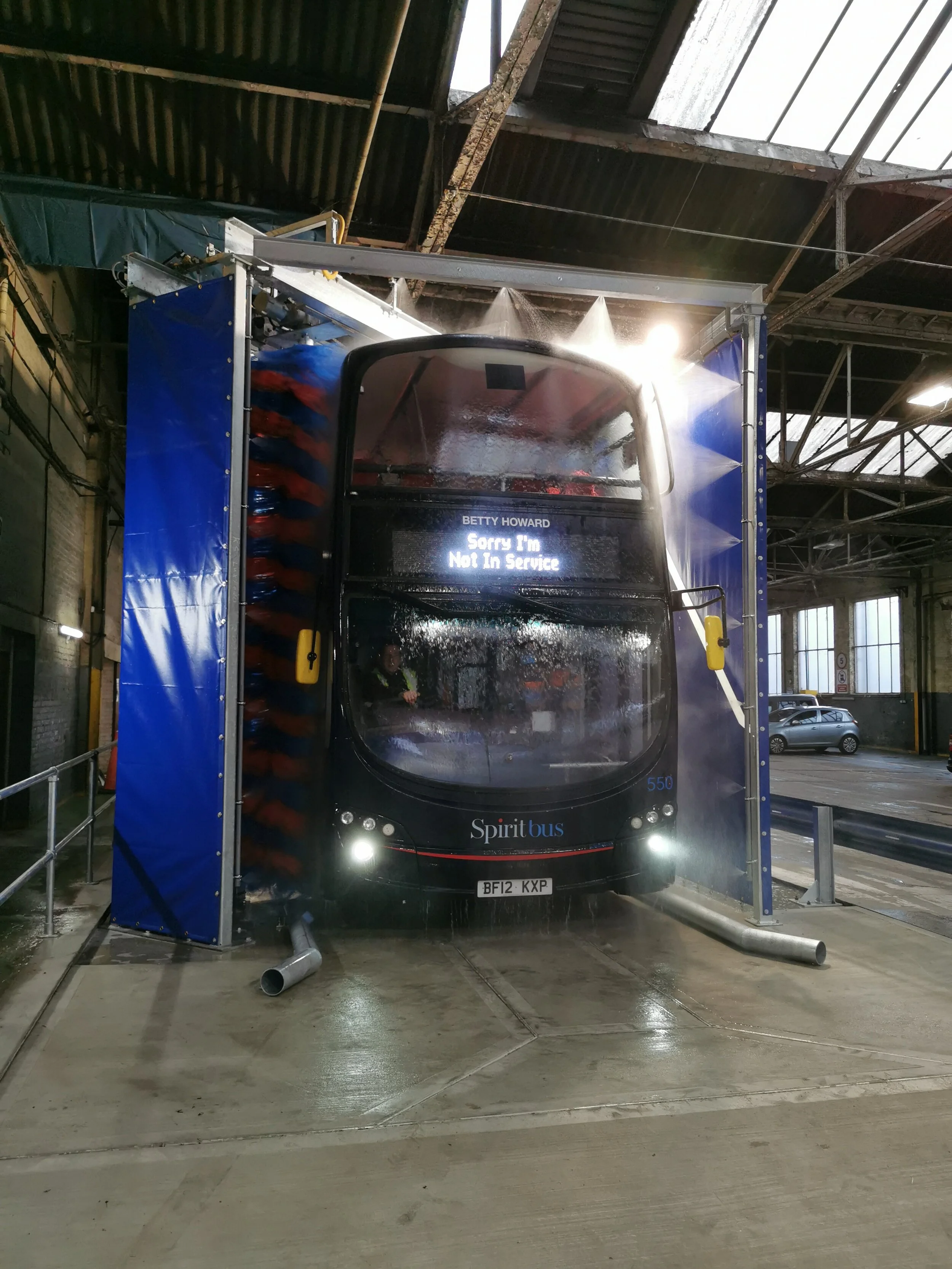
The project addressed several challenges with the depot's existing washing arrangements, including reliability issues, high installation and repair costs, inconsistent cleaning performance and equipment occupying valuable depot space.
Working closely with the Go-Ahead Group, WNV developed a compact, reliable washing system capable of cleaning all four sides of a bus in under 60 seconds, while incorporating water reclamation to reduce freshwater consumption.
The result was a dependable, easy-to-operate system designed around the operational realities of a busy bus depot.
The Customer
Brighton & Hove Bus Company is part of the Go-Ahead Group, a major operator in the UK bus and coach sector. Maintaining a clean, well-presented fleet is an important part of its operation, alongside supporting vehicle maintenance and longevity.
WNV Systems had already established a working relationship with the Go-Ahead Group through the supply of under-chassis wash systems and water reclamation equipment. This experience, together with WNV's reputation for build quality and after-sales support, provided a strong foundation for developing a new approach to bus washing.
The Challenge
Brighton & Hove Bus Company needed a more effective alternative to its existing drive-through bus washing equipment.
The previous arrangements presented several operational challenges, including reliability concerns, expensive repairs, installation costs and a large equipment footprint that reduced the space available for bus parking.
The depot needed a system that could deliver consistent cleaning at the pace required by daily bus operations, without creating additional pressure on space, water consumption or staff.
WNV worked closely with the operator to establish a set of requirements for the new system. It needed to clean all four sides of a bus to a high standard in approximately 45 seconds, while providing reliable performance under the demands of a busy depot. Reducing freshwater consumption through water reclamation was also a key priority, alongside creating a compact installation that would preserve valuable parking space.
The system had to be safe and straightforward to operate, with automatic operation and clear traffic-light instructions for drivers. The design also needed to accommodate a pedestrian walkway alongside the wash, minimise overspray through the use of splash screens, and improve visibility with additional lighting within the existing building.
Working within the depot's existing infrastructure presented further challenges. The restricted roof height had to be taken into account, the existing building needed to accommodate the plant room, and a new electrical supply had to be routed approximately 130 metres from the existing distribution board. Above all, the equipment needed to be robust enough for frequent daily use by multiple members of staff, supported by dependable servicing, maintenance and after-sales support throughout its working life.
The WNV Systems Solution
Following initial discussions and design briefings, WNV Systems proposed a new drive-through wash format tailored to the requirements of the Conway Street depot.
Rather than simply replacing the existing equipment with a similar system, WNV developed a solution focused on cleaning performance, reliability, water efficiency and the efficient use of space.
The project combined the new bus wash equipment with an integrated water reclamation system, housed in a dedicated plant room.
Designing around the depot
The installation was planned to make effective use of the existing building and minimise the space occupied by the washing equipment. The design also accounted for the restricted roof height, the need for a safe pedestrian route and the requirement to manage overspray within the wash bay.
Civil works were completed to accommodate the water reclamation system, including the installation of a three-chamber interceptor. The electrical supply also had to be routed from the existing distribution board over a distance of approximately 130 metres.
The new system was designed to clean the front, rear and both sides of a bus in under 45 seconds, depending on the driver's speed through the wash.
Importantly, buses can pass through the system without removing their mirrors beforehand. This helps simplify the washing process and avoids an additional preparation step for drivers or depot staff.
Water reclamation was incorporated into the installation to collect, treat and reuse wash water. The system is capable of reclaiming and reusing up to 90% of the water collected, helping reduce freshwater consumption.
The wash was designed to be simple for drivers to use. The vehicle approaches the system, which starts automatically, and traffic lights indicate when it is safe to proceed through the wash.
Splash screens and improved wash-bay lighting were also incorporated to address the practical requirements of the existing building.
Installation and Commissioning
Once the design had been agreed and the civil works approved and completed, WNV installed the supporting framework and washing equipment alongside the new water reclamation unit.
The system was then tested, commissioned and adjusted to ensure it operated as intended within the depot environment.
The completed installation brought together the drive-through wash, water reclamation equipment and supporting infrastructure in a compact arrangement designed to meet the demands of daily bus operations.
The Results
Since installation, the new drive-through bus wash has successfully met the operator’s requirements, providing a practical and dependable solution for maintaining the fleet. The system can clean a bus to a high standard in under 45 seconds, depending on the driver's speed through the wash, helping the depot maintain an efficient cleaning process without compromising on results.
The integrated water reclamation system can reuse up to 90% of the water collected, reducing the demand for fresh water. Its compact design also occupies less space than the previous arrangement, helping preserve valuable parking space within the depot. Together, these features support more efficient use of both water and available site space.
Day-to-day operation has also been simplified. Automatic start-up and traffic-light guidance allow drivers to pass through the wash easily, while the system eliminates the need to remove bus mirrors before washing. Integrated splash screens and additional lighting help address the practical challenges of the existing wash bay, creating a more suitable working environment.
Combined with WNV’s service, maintenance and warranty support, the installation provides a reliable long-term washing solution for the depot. The project demonstrates how a system designed around the specific needs of a bus operator can bring together effective cleaning, operational efficiency, reduced freshwater consumption and better use of available space.
Customer Testimonial
“Having worked with WNV for a number of years with their Chassis Wash Systems, their new drive-through bus wash has finally given us a dependable system to maintain our buses with a premium quality of clean, alongside this supporting us with their unrivalled service and maintenance.
I would highly recommend their drive-through top wash.”
Steve Ambury
Engineering Director, Brighton & Hove Bus Company
Looking Ahead
WNV Systems continues to explore further developments for its drive-through bus wash technology.
Potential future enhancements include driver speed monitoring and tracking, alongside systems for monitoring reclaimed-water quality and supporting water testing.
These developments would build on the system's existing focus on reliable cleaning, efficient operation and responsible water use.
A Bespoke Bus Washing Solution from WNV Systems
The Conway Street project demonstrates WNV Systems' approach to commercial vehicle washing: working closely with operators to understand their requirements and developing equipment around the practical demands of their sites.
For bus and coach operators looking to improve fleet washing performance, reduce freshwater consumption or make better use of depot space, WNV can help identify a solution suited to their operational needs.