
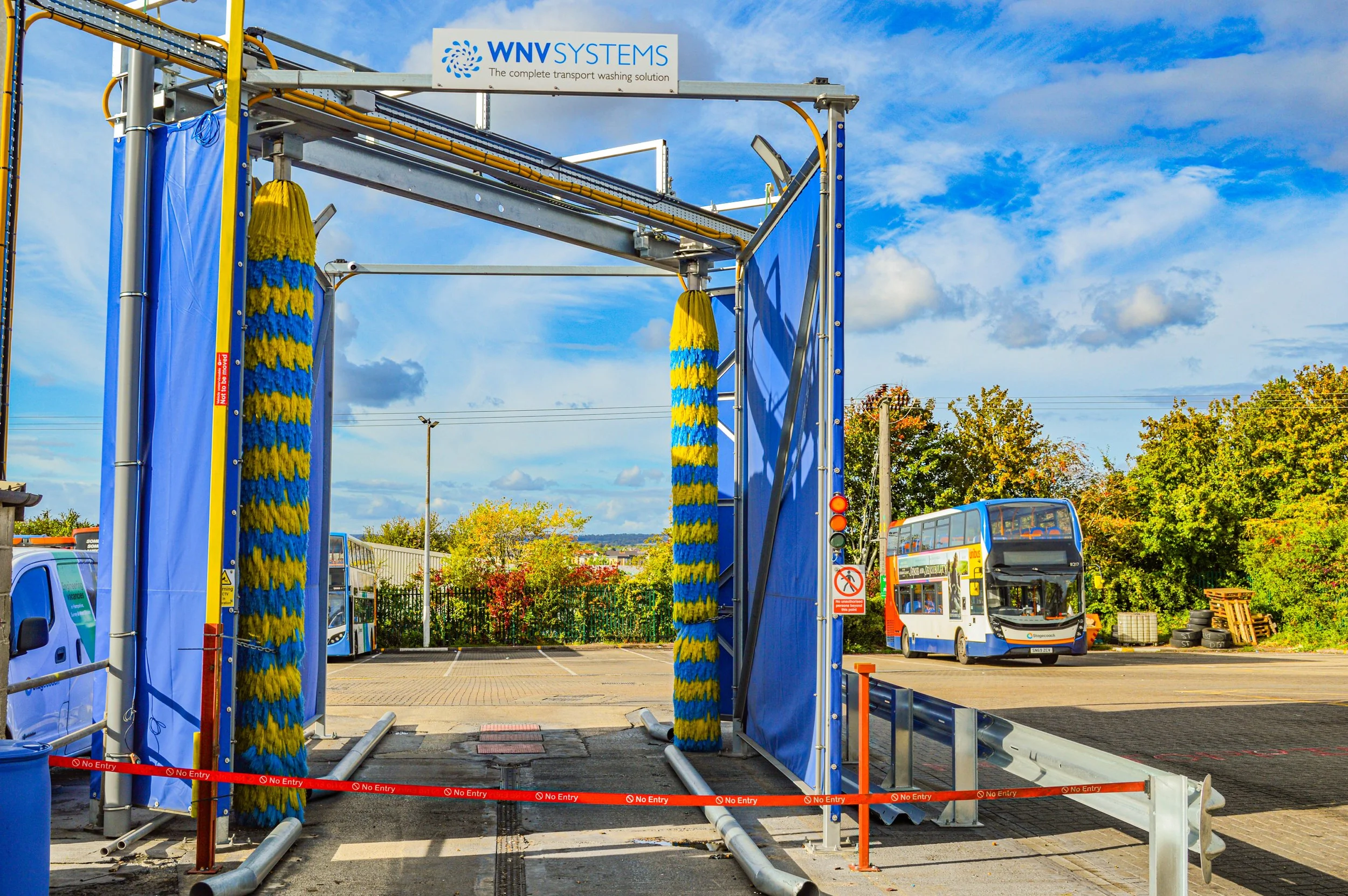
WNV Systems looks at ways that bus operators can make their depot – especially the cleaning systems – more efficient, leaving more time for other important tasks.
There are not many busier places at night than a bus depot. Vehicles have been out on the road all day and need to be fuelled, checked, cleaned and sometimes repaired. Some bus depots have responsibility for over 100 buses, and a short time window to get these all turned around and ready to go for the following morning.
Cleaning is only a slither of the responsibilities that shunters have, but an inefficient washing process can compete for staff time and space on the depot. Is there a better wash process that can help bus operators keep pace with operational demands?
Where Do Bus Depot Washing Bottlenecks Occur?
There are four potentially common pressure points for operators. Some may experience all four, whilst others may only see one or two issues.
Vehicles need to leave on schedule, so cleaning must fit around departure times and vehicle availability.
Buses may arrive back to the depot of an evening in waves, creating peaks in demand for washing facilities, fuelling stations and maintenance checks.
A single wash bay or an unsuitable routine may struggle to accommodate the number of vehicles that require cleaning.
Finally, each of the buses needs to go through a plethora of activities, meaning vehicle movements must be efficiently coordinated.
Every bus depot experiences operational difficulties, so a quick, simple and effective cleaning routine should help alleviate one of those.
What Does an Inefficient Washing Process Cost Your Operation?
The obvious inefficiency comes down to cost. Staff spend excessive time manually washing buses, and if they aren’t washing, they’re waiting for the next batch of vehicles to return. This means depots must balance staff numbers for the rush and staff dwell time during the waiting period.
This may lead to a dip in the wash quality, as staff rush to put a bunch of vehicles through the process quickly when they do arrive. This may lead to difficulty in accommodating fleet growth, service patterns or even staffing shifts.
It must be emphasised that this isn’t a global issue, but there are certainly some depots that could do with a more efficient system.
Five Ways to Improve Bus Depot Washing Efficiency
There are some things that could be an easy fix. These are all areas that need careful consideration and could help operators weigh up some options.
1. Map vehicle movements.
Identify when buses return, when they are washed and when they need to be available again.
2. Measure the current process.
Record approximate wash-cycle times, waiting times, staffing requirements and daily vehicle volumes.
3. Review the wash-bay layout.
Look for unnecessary manoeuvering, queuing or conflicts with other depot activities.
4. Establish consistent washing procedures.
Set clear expectations for cleaning frequency and presentation, taking account of operational requirements.
5. Assess whether the equipment fits the fleet.
Consider whether the existing system can handle the vehicle types, volumes and operating windows required.
Could an Automatic Drive-Through Bus Wash Help?
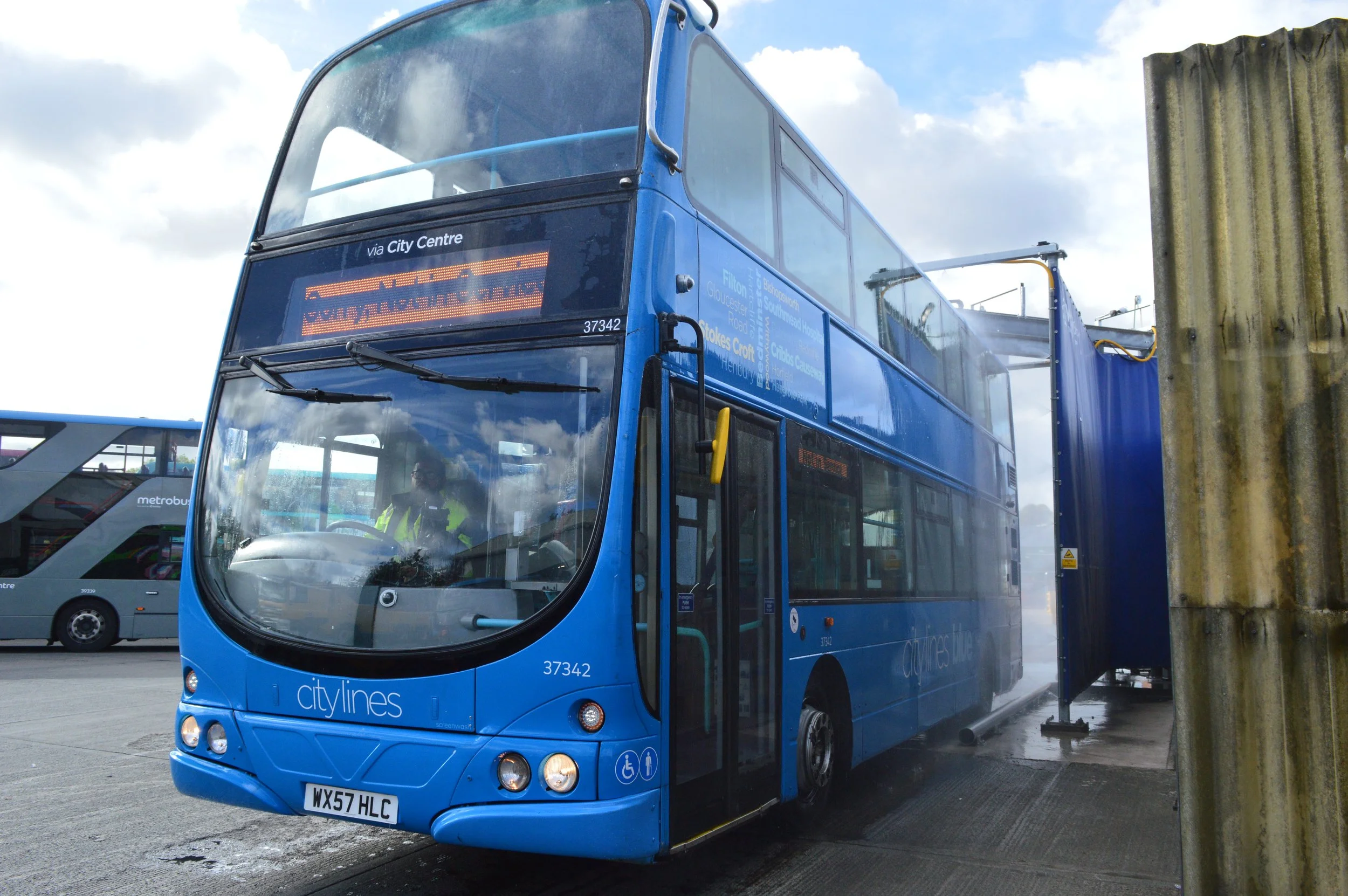
An automated bus washing system could be fitted into a more structured depot process. Not only does it reduce the time taken to clean a bus, it creates uniformity in the wash quality, requires less staff on site and reduces the health and safety risks compared to manual washing.
A two-brush drive-through system, positioned efficiently, could allow a bus to arrive on site, be refuelled and then driven through a wash before going off for inspection if necessary.
In all of that, the actual washing of the bus would probably be the quickest point in the routine, with some systems, when used correctly, performing a standardised bus wash in 60 seconds.

Choosing the Right Bus Wash System for Your Depot
WNV’s advanced bus wash machines provide a thorough, consistent clean in just 60 seconds. Paired with a water reclaim system, bus depots can reduce freshwater use by up to 90%, giving operators a more sustainable and economical way to maintain their vehicles.
For bus depots maintaining and managing over 25 buses, an automated was system will pay for itself in no time.
It’s important that all decisions are weighed up. Not every bus depot would benefit from an automated bus wash, whether that’s because of the space required, or the number of vehicles isn’t great enough to cause a problem. But if you’re considering switching up your bus wash routine, WNV should be your first port of call.
Visit the website at www.wnv-systems.com, email sales@wnv-systems.com or call one of our experienced fleet-washing equipment specialists on 020 8641 5601.