
Choosing the right commercial vehicle washing equipment is an important decision for local authorities. WNV Systems explores the key considerations when investing in a new fleet washing facility or upgrading existing equipment.
Local authorities are responsible for operating and maintaining a wide range of commercial vehicles, from refuse collection trucks and road sweepers to vans, minibuses and specialist operational vehicles.
Keeping these vehicles clean is an important part of depot management. However, finding an effective way to wash an often diverse fleet can present several challenges.
Different vehicles have different cleaning requirements, washing frequencies can vary, and the equipment needs to fit around the practical demands of a busy depot. There are also wider considerations around water consumption, environmental responsibilities, maintenance and long-term operating costs.
So, what should local authorities look for when choosing a fleet washing system?
Whether you are planning a new wash bay, replacing outdated equipment or reviewing your existing washing facilities, there are several important factors to consider before making an investment.
Understand the requirements of your fleet
The first step is to understand exactly what you need your washing system to achieve.
Unlike some private commercial operators, local authorities often manage a particularly varied fleet. A single depot might be responsible for refuse collection vehicles, road sweepers, gritters, tractors, vans and smaller passenger vehicles.
These vehicles have different dimensions, cleaning requirements and operational demands.
For example, a refuse collection vehicle working in waste management may require regular, thorough cleaning, including attention to the chassis and underside. A council van or passenger vehicle may have considerably different requirements.
Before looking at specific equipment, consider how many vehicles need to be washed, what types and sizes of vehicles make up the fleet and how frequently each needs cleaning. It is also important to understand whether particular areas require additional attention, such as the chassis and underside, and whether you need to accommodate specialist or unusually sized vehicles.
Future requirements should also be considered. If your authority expects to introduce different vehicle types or increase the number of vehicles operating from a depot, your washing facility should ideally be capable of accommodating those changes.
Having a clear understanding of these requirements will help narrow down the available options and ensure the equipment is suitable for the vehicles it needs to accommodate.
Choose the right type of vehicle washing equipment
Not every fleet needs the same washing solution. The right equipment will depend on vehicle types, washing volumes, available space and the level of cleaning required.
There are several types of commercial vehicle washing systems worth considering.
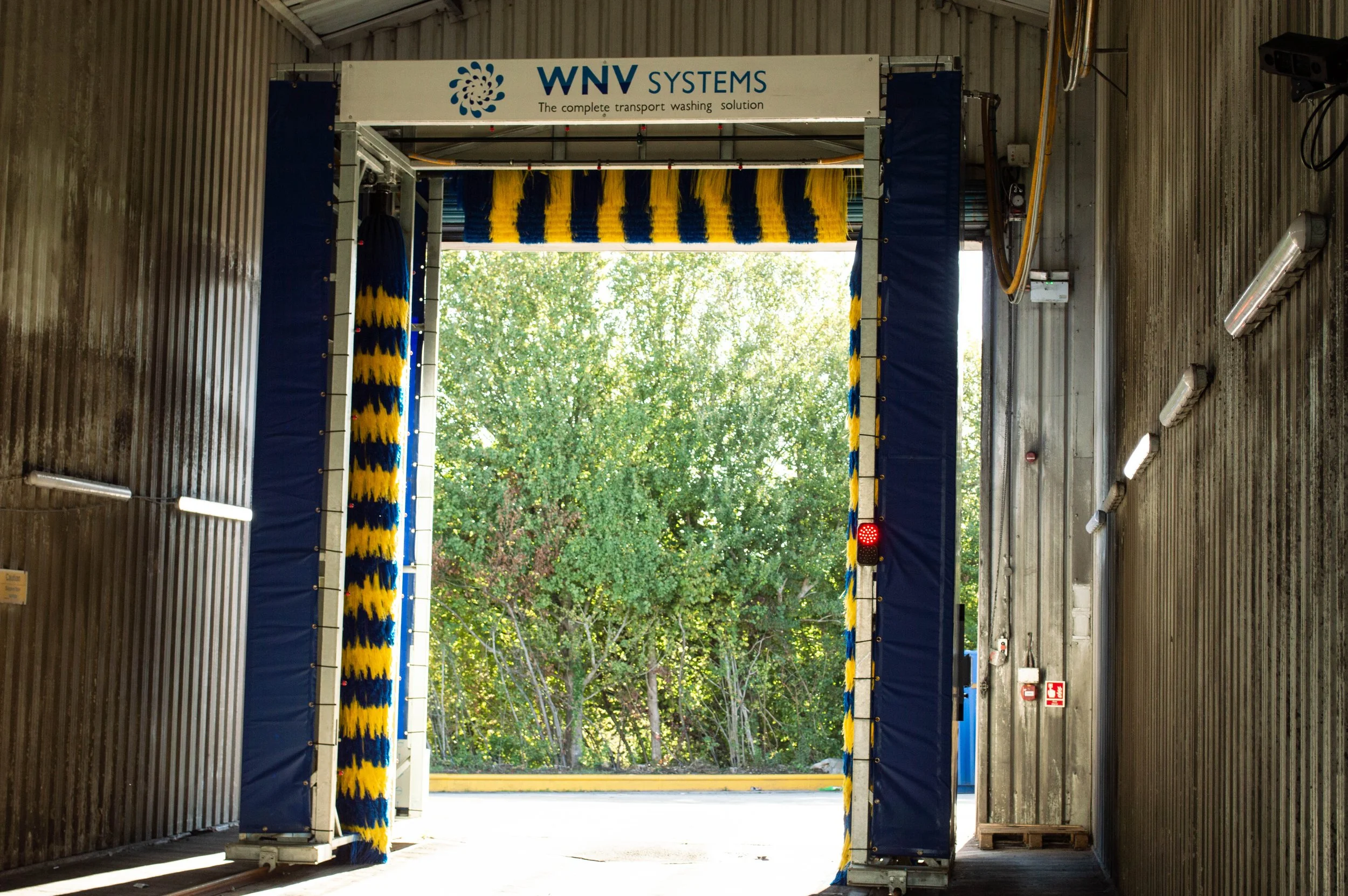
A three-brush rollover system is designed to automate the washing of larger commercial vehicles, including refuse collection vehicles, trucks and other rigid vehicles.
The vehicle remains stationary while the washing equipment moves around it, using rotating brushes to clean the front, rear and sides.
For local authorities operating larger commercial fleets, this can provide a consistent and structured approach to external vehicle cleaning while reducing the reliance on manual washing.
It is particularly worth considering where a depot washes a high volume of larger vehicles and wants to establish a more automated washing process.
The underside of commercial vehicles can accumulate significant amounts of dirt, mud and road debris, particularly for vehicles operating in waste collection, highways and other demanding environments.
An under-chassis wash system is designed to direct high-pressure water towards the underside of a vehicle as it passes through the installation.
This can help make an area that is often difficult to clean manually more accessible as part of a regular washing routine.
For local authorities operating refuse collection vehicles, road sweepers and other heavy-duty vehicles, under-chassis washing may be an important consideration when reviewing depot cleaning requirements.
High-pressure washing equipment provides a flexible option for cleaning vehicles and equipment that may not be suitable for automated brush systems.
It can be particularly useful for irregularly shaped vehicles, specialist equipment and areas requiring more targeted cleaning.
Depending on the requirements of the depot, high-pressure systems can be considered as a standalone solution or alongside automated washing equipment.
For some local authorities, one type of washing equipment may be sufficient. Others may benefit from combining different technologies.
For example, a depot operating a large refuse collection fleet might benefit from a three-brush rollover system for external cleaning, alongside an under-chassis wash for cleaning underneath vehicles.
The important thing is to select equipment based on the actual cleaning requirements of the fleet rather than choosing a system simply because it is available.
Consider water consumption and environmental impact
Water consumption is an increasingly important consideration when investing in commercial vehicle washing equipment.
Washing a large fleet regularly can require considerable quantities of water, particularly where equipment relies entirely on a fresh water supply.
For local authorities, reducing water consumption can support wider sustainability objectives while potentially helping to manage operational costs.
One option worth investigating is a vehicle wash water reclaim system.
How does water reclaim work?
A water reclaim system collects water used during the washing process, treats it and makes suitable water available for reuse in selected stages of the wash cycle.
Depending on the system design, treatment can include processes such as separation and filtration to remove dirt, grit and other unwanted material.
The treated water can then be stored and reused where its quality is appropriate, reducing the demand for fresh water.
It is important to understand that not all reclaimed water is suitable for every stage of a wash cycle. The treatment process needs to be designed around the equipment and the quality requirements of the intended application.
What about wastewater and drainage?
Water management is not just about reducing consumption. Local authorities also need to consider how wastewater is collected, treated and disposed of.
UK environmental guidance recommends designated vehicle washing areas that prevent contaminated run-off entering surface water drains, watercourses or the surrounding ground. Appropriate collection, treatment and disposal arrangements should be considered as part of the wash-bay design.
Water reuse and recycling can also help reduce the volume of water requiring disposal, depending on the installation and operating arrangements.
These requirements should be considered early when planning a new washing facility or upgrading an existing one.
For further information, see the environmental guidance on vehicle washing and cleaning from NetRegs.
Make sure your site can accommodate the equipment
Even the most suitable washing system needs to work within the practical limitations of your depot.
Available space, vehicle movements, drainage and existing infrastructure can all influence which equipment is appropriate.
Before committing to a particular system, consider whether the proposed wash bay has sufficient room to accommodate the equipment and the vehicles passing through it. Vehicle height, length and width all need to be assessed, alongside approach distances, turning circles and space for vehicles waiting to be washed.
Groundworks are another important consideration. New installations or significant upgrades may require concrete works, drainage modifications and other civil engineering requirements. The existing site should be assessed to establish whether the foundations and ground conditions are suitable for the proposed installation.
Drainage and water supply also need careful consideration. The drainage system must accommodate the washing process and direct wastewater towards the appropriate collection or treatment arrangements. At the same time, the incoming water supply needs to meet the requirements of the proposed equipment.
Electrical requirements should be established during the initial planning process, as automated washing systems and associated treatment equipment have specific power requirements.
Depending on the system, space may also be needed for pumps, tanks, filtration equipment, water treatment and control systems.
A site assessment is therefore an important part of the selection process. It helps establish what can realistically be installed and whether any modifications are required before work begins.
It is also worth considering how the installation will affect the day-to-day operation of the depot, particularly where existing vehicle movements and operational schedules need to be maintained.
Look beyond the initial purchase price: reliability and after-sales support matter
When purchasing commercial vehicle washing equipment, it can be tempting to focus primarily on the initial investment.
However, the purchase price is only one part of the overall cost of owning and operating a washing system.
Local authorities need equipment that can operate reliably within a busy depot environment. If a washing system is unavailable or requires frequent repairs, it can create additional work for depot staff and disrupt established cleaning routines.
This makes the quality of after-sales support an important consideration.
Before selecting a supplier, it is worth understanding what servicing and maintenance packages are available, how quickly engineers can respond if equipment develops a fault and whether replacement parts are readily accessible. You should also establish whether operator training is provided, what ongoing technical support is available and what maintenance the equipment will require throughout its working life.
It is also worth asking about the supplier's experience in commercial vehicle washing and its ability to support installations in operational fleet environments.
A supplier's responsibility should not end once the equipment has been installed and commissioned.
At WNV Systems, after-sales service, support and maintenance form an important part of the wider offering. The objective is to provide customers with ongoing support throughout the life of their washing equipment.
For local authorities making a significant capital investment, understanding what happens after installation is just as important as understanding what is being purchased.
Assess the whole-life cost of the washing system
A lower initial purchase price does not necessarily mean a more cost-effective solution over the long term.
When comparing different systems, local authorities should consider the total cost of ownership rather than looking exclusively at the capital expenditure.
This includes the initial equipment purchase and installation, civil engineering and site preparation, freshwater consumption, wastewater and disposal costs, electricity, cleaning chemicals, consumables, routine servicing, maintenance, replacement parts and potential repairs.
Water reclaim is one example of how the wider operating costs can influence the decision.
Although a reclaim system involves an additional investment, reducing the volume of fresh water required may offer opportunities to lower ongoing water costs.
The potential savings will depend on the number of vehicles washed, washing frequency, existing water consumption, local water charges and the cost of installing and maintaining the reclaim equipment.
Local authorities should therefore request realistic operating estimates based on their own fleet and depot requirements.
Comparing the expected whole-life costs of different solutions can provide a much clearer picture of which investment offers the best long-term value.
Choose a supplier with experience in commercial fleet washing
Selecting the right equipment is important, but so is choosing the right supplier.
Commercial vehicle washing installations can involve several different elements, including equipment selection, site planning, civil engineering, drainage, water treatment, installation and ongoing maintenance.
Having a supplier that understands how these elements work together can make the process considerably more straightforward.
Look for a company that is willing to understand your existing operation, assess your requirements and recommend equipment based on what your fleet actually needs.
It is also worth looking at previous installations and speaking to suppliers about their experience working with local authorities and other commercial fleet operators.
At WNV Systems, we have been developing and delivering commercial vehicle washing solutions for local authorities for more than 25 years.
Our range includes three-brush rollover truck wash systems, under-chassis washing equipment and high-pressure washing solutions, alongside water reclaim capabilities.
We understand that every depot has different requirements, which is why assessing the vehicles, site and washing operation is an important starting point when considering a new installation.
Planning your next fleet washing investment
Choosing a fleet washing system is about more than simply finding a machine that cleans vehicles.
For local authorities, it is an opportunity to review how vehicles are cleaned, how depot operations are organised and whether existing facilities are delivering the performance and efficiency required.
By understanding fleet requirements, selecting appropriate equipment, considering water management and assessing whole-life costs, authorities can make more informed decisions about their next investment.
It is also important to involve the right people early in the process, including fleet managers, depot managers, engineering teams and those responsible for site infrastructure and environmental compliance.
A properly assessed installation should reflect the needs of the current fleet while allowing sufficient flexibility for future requirements.
Considering a new fleet washing system for your local authority?
WNV Systems works with local authorities to design, supply and install commercial vehicle washing solutions tailored to individual fleet and depot requirements.
Whether you are replacing existing equipment, planning a new wash bay or exploring ways to improve water efficiency, speak to our team to discuss your requirements and the options available.