
WNV takes a look at the best ways to clean trailers and shipping containers to hit the high standards required.
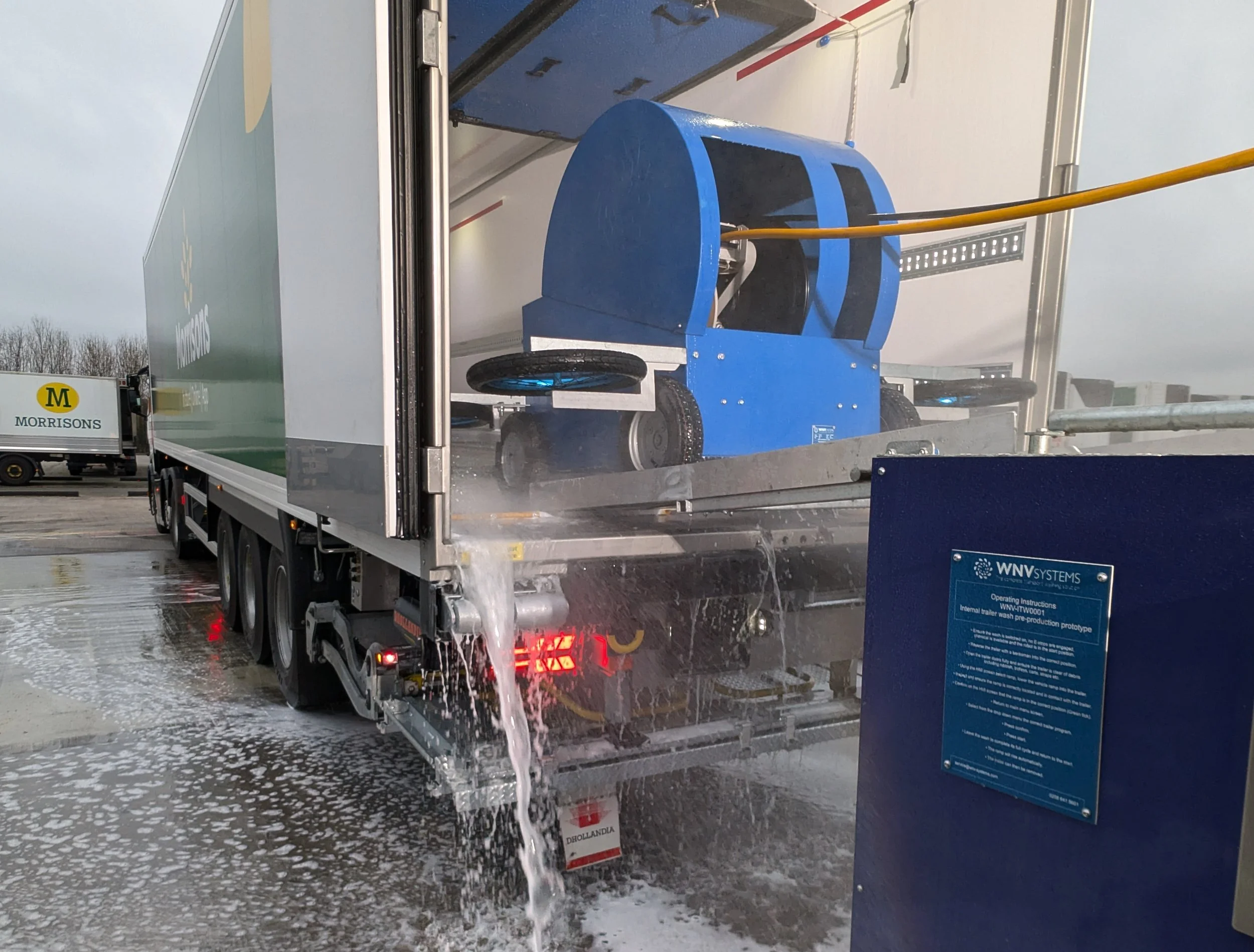
Shipping trailers and shipping containers are vital to keep the world turning. They supply a way to keep goods and food moving for the general public’s benefit. But when it comes to cleaning the inside of these cogs of industry, is there an easier way than someone getting inside with a pressure washer?
It needs no explanation that trailers and containers need cleaning before reuse, especially when transferring food-based products. But this process can be labour intensive and difficult to standardise.
There’s plenty of areas that could be hard to reach and there’s plenty of high-risk chemicals that may need to be used. But it’s not something that can be skipped, and it needs to same operational attention as other depot activities.
Why internal cleaning requirements vary
A one-size-fits-all cleaning process can not possibly considered. Each load, each trailer and each container probably requires an individual, specific requirement.
Each load more than likely contains different cargo. Some material may leave residue, dust, dirt of debris behind. Some may leave biological traces, waste product or harmful bacteria. Checking what was in the previous load is a worthwhile activity.
That way, depots can work out and select a suitable cleaning method, and suitable cleaning products.
Cargo-specific requirements, contamination risks and any applicable hygiene rules must determine the appropriate cleaning procedure.
Where can a manual cleaning process create difficulties?
Cleaning processes and schedules often creates headaches. The balancing of time it takes staff to set up, clean and check each unit is weighed up against other pressing depot activities.
A consistent clean if each trailer and container is harder to achieve, especially with numerous staff members each performing the task differently. Add that to the pressures of performing cleaning tasks during busy periods, and the time needed to prepare for the next trailer or container, timescales are being restricted.
Finally, safe access, wet surfaces and the plethora of cleaning chemicals that may be needed each add their own specific challenges.
Reviewing current processes and schedules, including preparation, washing and turnaround, would probably show up some opportunities for improvement.
Could a dedicated internal trailer wash system help?
A purpose-designed, automated system could certainly help businesses establish a more repeatable, safer washing process, with a defined method for cleaning suitable trailer interiors and containers.
This leads to more consistency across the washing routine, less reliance on staff members manually washing interior surfaces and could potentially lead to the reduction of the need for staff to enter the trailer or container during washing.
An automated system adds a more structured process for managing cleaning between loads, and a better integration of the washing process across the depot operations.
And that’s where WNV Systems’ patented Internal Trailer Wash could come into play.
Choosing the right configuration for your operation
Different sites handle containers and trailers in different ways, so the right installation depends on the operation.
WNV’s Internal trailer wash has three different configurations.
Static configuration
This is worth considering for an operation if a trailer or container can be brought to a designated depot wash bay location, and a fixed wash area fits the site’s natural workflow.
Truck-mounted configuration
Consider this where a mobile, vehicle-mounted arrangement is better suited to the operation. It provides the practical advantage of flexibility on how the equipment is deployed around the site.
Container-based configuration
This is the option for those that need to clean shipping containers as well as, or instead of, conventional trailers. This is especially relevant to container depots and businesses handling reusable shipping containers, such as ports or port-based services.
Configuration selection should consider the types and dimensions of equipment being cleaned, available space, site layout, utilities, water management and required cleaning procedures.
What should you assess before investing?
Ask yourself these questions:
How many trailers or containers do I clean in a typical day or week?
What types of residue or contamination do I need to remove?
How much staff time does the current process require?
Does cleaning require workers to enter the trailer?
Where could washing fit into our existing vehicle movements?
What water supply, drainage, wastewater treatment or reclaim arrangements are needed?
What standard must be achieved before the next load?
Asses the actual operational figures when reviewing the potential value of a new system. A high-volume operation may have different priorities from a site cleaning just a few trailers and containers each week.
Discuss your internal trailer or container washing requirements with WNV Systems
If you would like to consider an automated trailer washing process, WNV can help you decide what is right for you. By finding out the equipment being cleaned, your current cleaning process, the constraints of the site, WNV would help create the perfect solution for you.
If your business regularly cleans trailer interiors or shipping containers between loads, visit www.wnv-systems.com, email sales@wnv-systems.com or call 020 8641 5601 to speak with one of our expert team about your requirements and explore whether an Internal Trailer Wash system could suit your operation.
You can also read our guide on cleaning shipping trailers and containers here.